
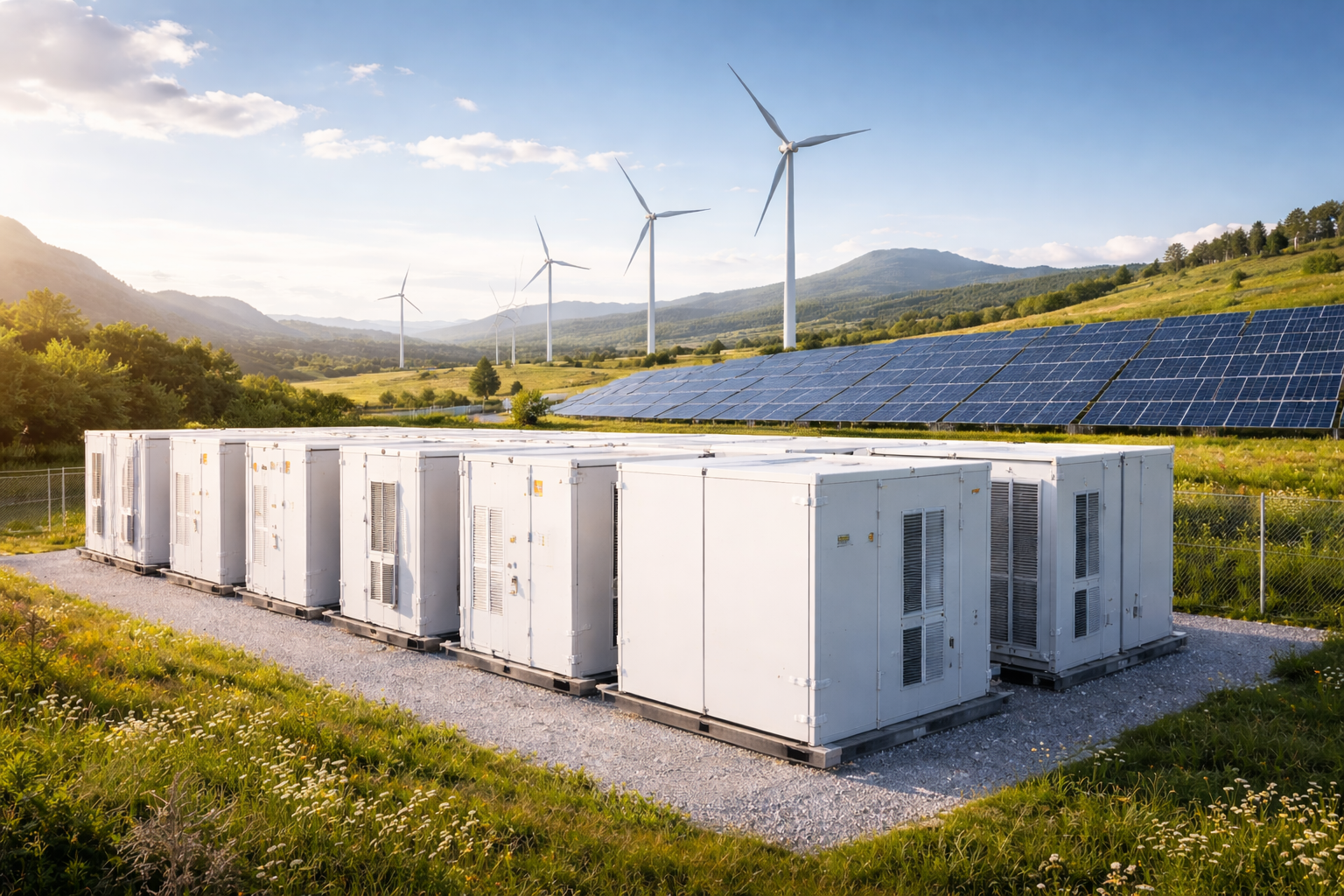
Making energy storage count.
With better emissions accounting.
We’re an industry coalition advancing how the emissions impacts of energy storage are measured, enabling more energy storage projects, better operating decisions, and faster grid decarbonization.
Purpose
Energy storage is a critical component to a clean and reliable electricity grid. Yet energy storage is not currently recognized for the emissions reductions it enables on the grid. By improving how emissions from energy storage are quantified, we aim to align market incentives, operational decisions, and climate outcomes in a way that accelerates grid decarbonization.
Big Impact
Based on current projections, energy storage will play a large role in decarbonizing the grid.
7.3 TWh
Projected Cumulative Global
Battery Capacity (2035)
=
283M
Estimated Annual Tonnes of
Avoided Emissions (2035)
Source: Bloomberg New Energy Finance
Members
The ESSC has brought together industry leaders, researchers, and asset operators to establish rigorous, transparent methods for measuring the real-world emissions impacts of energy storage.
100+
Number of
Members
$12 Trillion
Total
Market Value
>10,000 MW
Nameplate Capacity
under Operation











































Governance
The ESSC is organized around a collaborative governance structure designed to support inclusive stakeholder engagement and rigorous methodology development.
Steering Committee
The Steering Committee oversees stakeholder engagement, priorities for methodology development, and coordination across working groups.
Working Groups are formed from subject-matter experts as needed to support technical development, address implementation questions, and maintain the ESSC’s methodology.
Working Groups
ESSC membership is open and free. Members participate in consortium activities, contribute perspectives and expertise, and engage in the development and review of ESSC’s work.
Membership
Steering Committee Members




Methodology
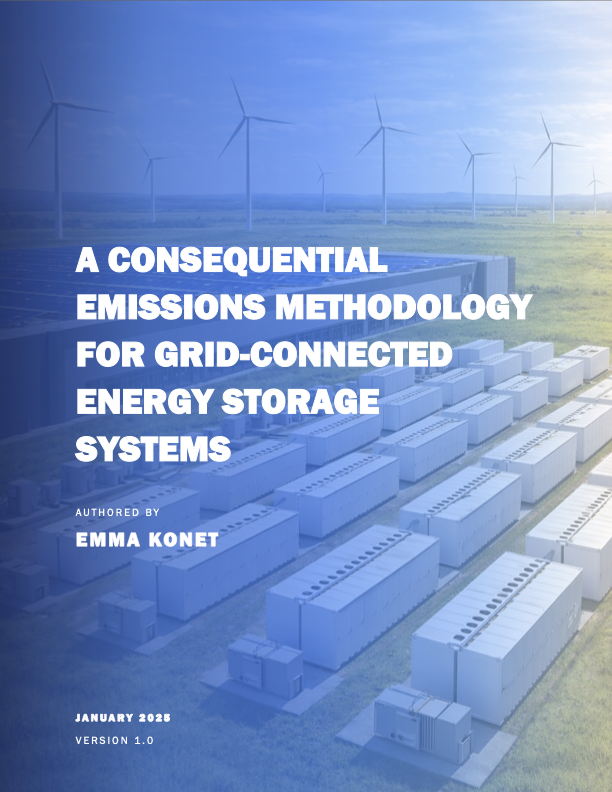
This methodology helps reporting entities and project proponents understand how energy storage affects grid emissions. It provides a framework for assessing additionality and measuring the real-world consequential emissions impacts of energy storage projects.
Purpose: Supports reporting entities in making credible consequential emissions impact claims by providing a framework that is designed to complement existing emissions reporting and target-setting standards.
Additionality: Outlines structured tests to determine whether emissions impacts are additional, including financial feasibility additionality tests for greenfield projects and activity-based additionality tests for existing projects.
Baselining & Emissions Quantification: Defines counterfactual baseline scenarios and quantifies emissions impacts, introduces the concept of Dynamic Baselining for existing projects, and prescribes use of marginal emissions rates.
Measurement & Verification: Establishes expectations for data quality and how to handle uncertainty when auditing quantified emissions impacts.
Resources

Batteries and hybrid resources that can operate to maximize carbon abatement can also provide decarbonization benefits that are ignored by traditional MWh-based accounting. There is a better way to measure and incentivize clean energy resources. This paper proposes that customers, markets, and policymakers embrace the concept of Locational Marginal Emissions (LMEs) as a force multiplier for directing their clean energy program dollars to maximize carbon impact.
What Are Marginal Emissions?

How Would Carbon Arbitrage Work for Energy Storage?
Carbon contracts with batteries might provide corporations with an elegant solution to meet sustainability targets and decarbonize the electricity grid, which cannot be accomplished through renewable energy purchases alone. This paper examines the economic and carbon impact of compensating batteries for carbon reduction using detailed electricity emissions data and a carbon contract.
News

Not Every Battery Is Created Equal
February 22, 2024
Check out HASI’s Climate Positive Podcast to learn more about the Energy Storage Solutions Consortium (ESSC), which seeks to align the economic incentives of the storage market with truly accelerating grid decarbonization.

Here's How Batteries Could Reduce More Emissions.
September 6, 2023
Check out David Roberts’ Volts Podcast to learn more about how we incentivize emission reductions by making energy storage eligible for carbon offset.

Leading Organizations Launch New Consortium
September 14, 2022
The Energy Storage Solutions Consortium’s goal is to create an open-source, third-party-verified methodology to quantify the GHG benefits of certain grid-connected energy storage projects.
Exploring Energy Storage For Grid Innovation
September 13, 2022
In 2022, Meta, along with our partner Broad Reach Power, launched a pilot to test how energy storage projects such as large-scale batteries could reduce greenhouse gas emissions while continuing to help preserve a reliable electrical grid.
Contact Us
The ESSC comprises a diverse set of stakeholders across sectors and geographies. We welcome unique perspectives that will help ensure the success of this initiative. If you are interested in supporting the ESSC’s work, please fill out this interest form.